
What goes into producing a bespoke pump?
At first glance, selecting a pump can seem relatively straightforward. You know the liquid that needs to be moved, the required flow and pressure, and then find a pump capable of meeting those requirements. However, real-world applications are rarely quite that simple. For many applications, a standard pump will provide exactly what is needed. In others, site constraints, challenging process conditions or specific performance requirements mean an off-the-shelf solution simply isn’t suitable. So, what exactly goes into producing a bespoke pump?
Earlier this year, Apex Pumps Director Andrew Simpson shared an insight into the bespoke pump development process with Flow Magazine, looking at what happens from the initial specification through to design and manufacture.
Here, we’ve summarised some of the key stages involved.
When is a bespoke pump required?
The need for a bespoke pump solution can be driven by many factors. Limited space, existing pipework or legacy equipment can make installing a standard replacement impractical, while abrasive, chemically aggressive or solids-laden fluids may require different materials, seals or hydraulic configurations. The operating environment can also influence the design, particularly in hazardous or washdown areas or where a customer has specific requirements relating to controls, electronics or component standardisation.
Defining the specification
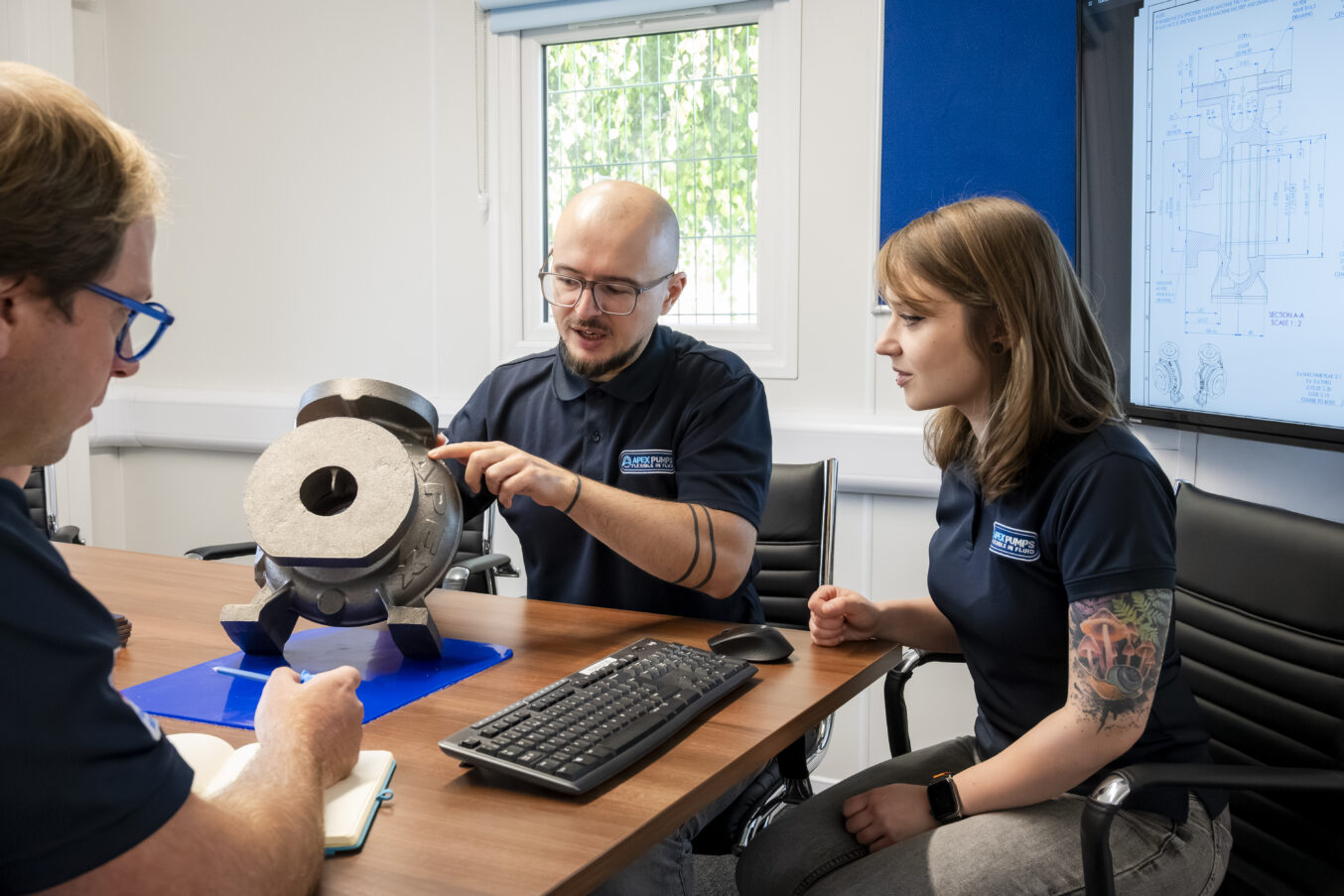
Understanding the application in detail is one of the most important parts of developing the right solution.
Five key areas sit at the heart of hydraulic pump selection:
- Flow rate
- Total dynamic head
- Fluid properties
- Net Positive Suction Head (NPSH)
- Operating conditions and environment
However, the specification goes beyond hydraulic performance. Available footprint, existing pipework interfaces, system pressures, operating temperatures and available utilities can all affect the final design. Even relatively small differences in the properties of the fluid being pumped can influence pump sizing and performance. Working closely with the customer at this stage allows us to understand the wider system, identify potential challenges and develop a solution around the actual application rather than simply selecting a pump based on headline duty points.
Turning the requirements into a practical design
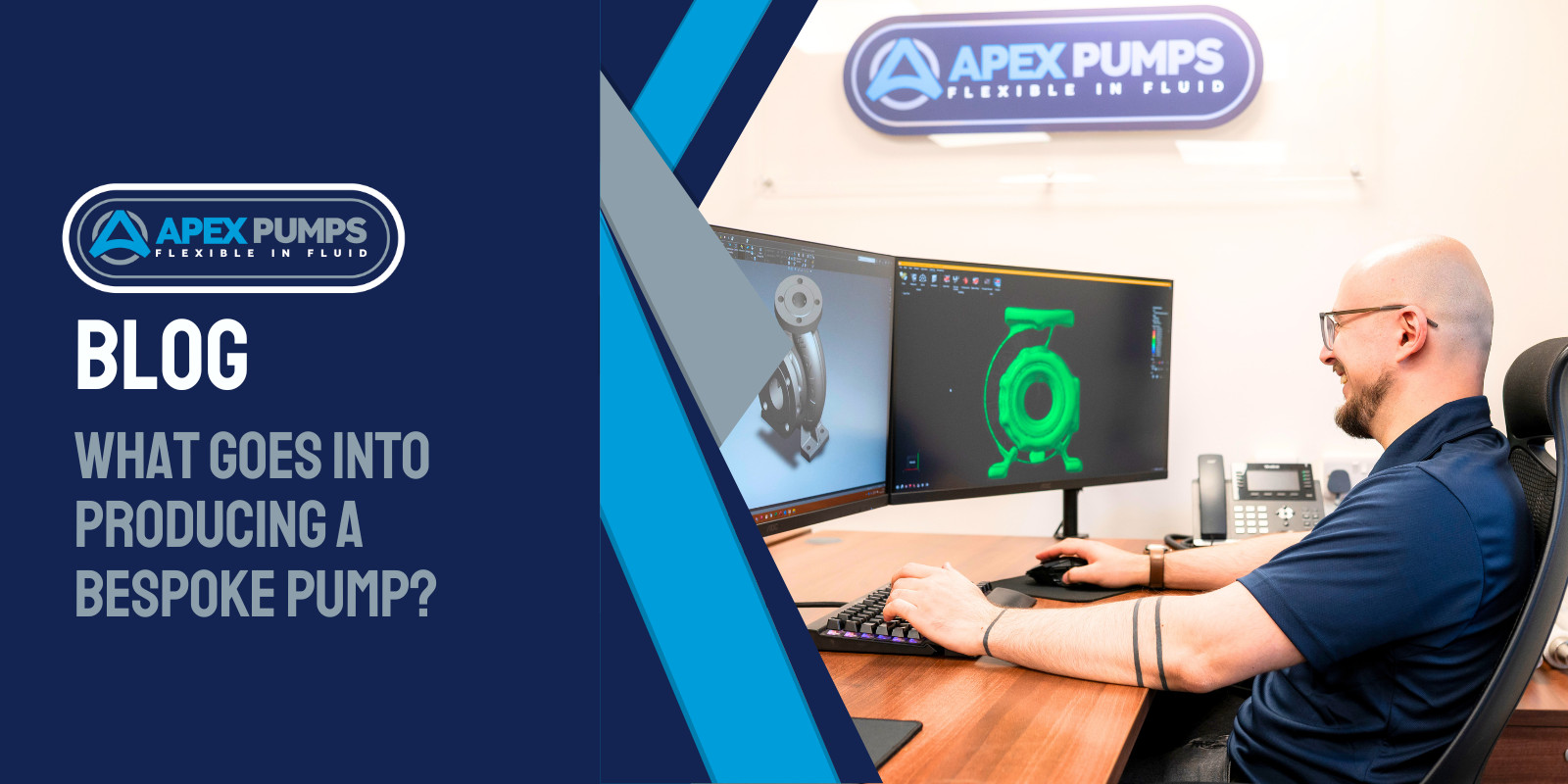
At Apex Pumps, 3D CAD modelling is used throughout the design process, allowing complete pump assemblies to be developed digitally before manufacture begins. Where a completely new hydraulic design is required, additional analysis and validation techniques can also form part of the development process.
Importantly, the design isn’t considered purely from a hydraulic perspective. How the pump will be installed, accessed and maintained throughout its working life also needs to be considered. Sometimes relatively small design changes can make a considerable practical difference, such as altering a casting to provide better tool access during assembly and future maintenance.
Designing with manufacture in mind
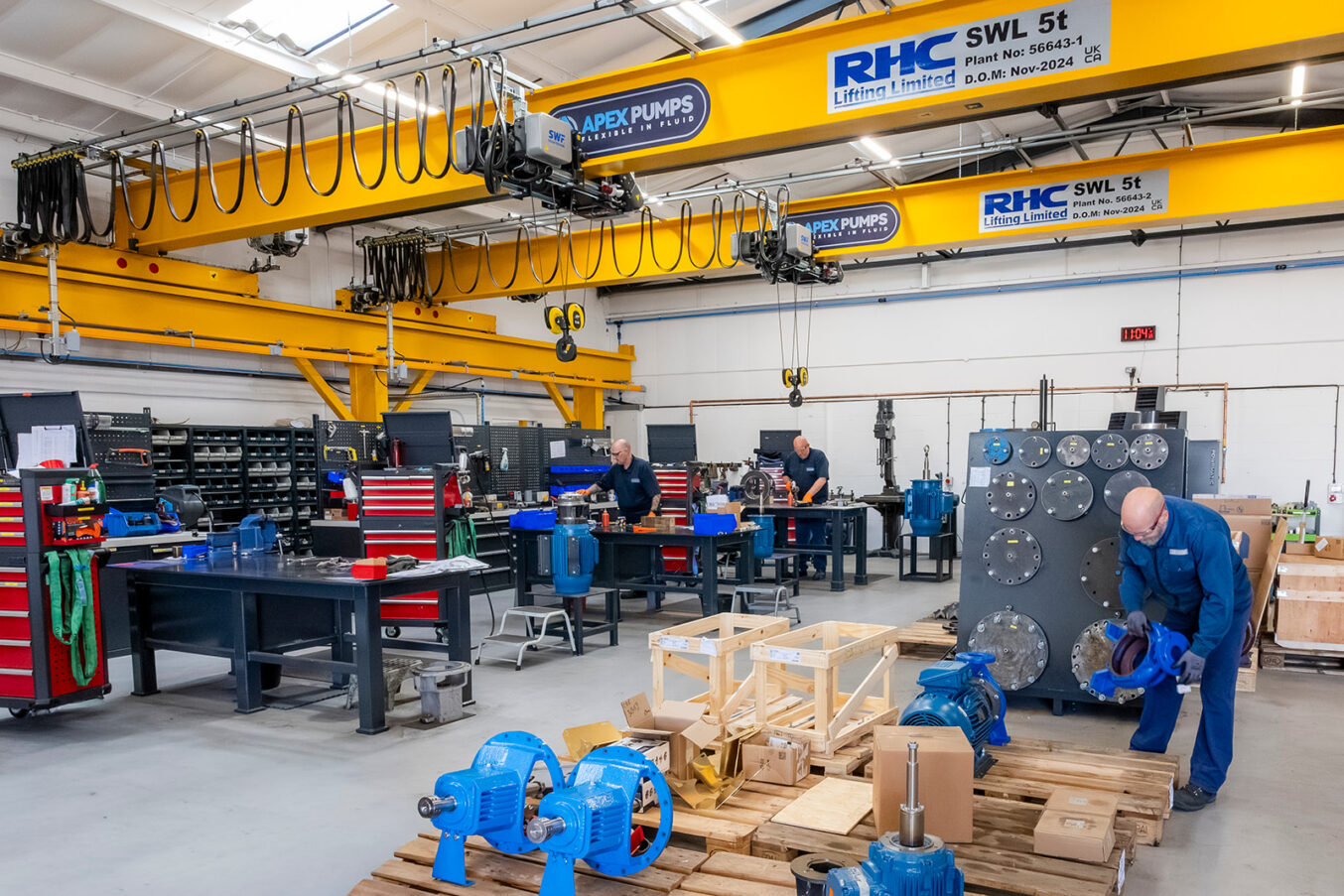
Another important part of bespoke pump development happens long before anything reaches the factory floor. Components need to be designed so they can be manufactured efficiently, accurately and consistently. This means considering everything from casting and fabrication through to machining and final assembly during the design process.
We work closely with our manufacturing and specialist supply partners to ensure designs account for the practicalities of each production process. Considering these factors early can improve manufacturability and assembly while helping to control production costs without compromising the performance required from the finished pump.
More than producing a pump
Ultimately, developing a bespoke pump is a collaborative process that brings together an understanding of the customer’s application with hydraulic design, engineering expertise and practical manufacturing knowledge. The aim is not simply to produce a pump capable of achieving a particular duty point, but to develop a solution that works within the wider system and can be manufactured, installed and maintained effectively. If you have bespoke pump needs, contact us today with your requirements.
Read the full Flow Magazine feature
For a more detailed look behind the process, Apex Pumps Director Andrew Simpson discusses what goes into producing a bespoke pump in Flow Magazine, including examples of the challenges that can lead to bespoke pump development.